







Artemis II: NASA Set to Send Humans Beyond the Moon Orbit for the First Time
By: Deepak kumar
Artemis II: A Historic Step in Human Space Exploration
The world is once again turning its attention to space as NASA prepares for one of its most ambitious missions in decades — the Artemis II.
This mission is set to take astronauts farther into space than any human has traveled in modern history. It marks a major milestone in humanity’s return to the Moon and future plans to explore Mars.
What is Artemis II Mission?
The Artemis II is the first crewed mission under NASA’s Artemis program. Unlike its predecessor, Artemis I, which was uncrewed, Artemis II will carry astronauts onboard.
The mission will send a crew of astronauts around the Moon and safely bring them back to Earth. Although astronauts will not land on the lunar surface during this mission, it is a crucial step before future Moon landings.

Launch Date and Preparation
According to recent updates, NASA is preparing for a launch window around early April 2026.
The mission has been under development for several years, with extensive testing of spacecraft systems, safety protocols, and astronaut training.
Engineers and scientists are working around the clock to ensure that everything runs smoothly during this high-profile mission.
Spacecraft and Technology
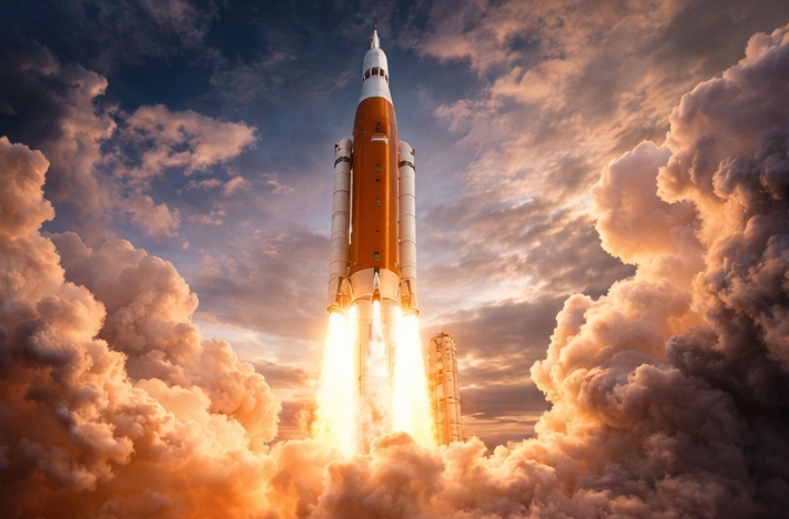
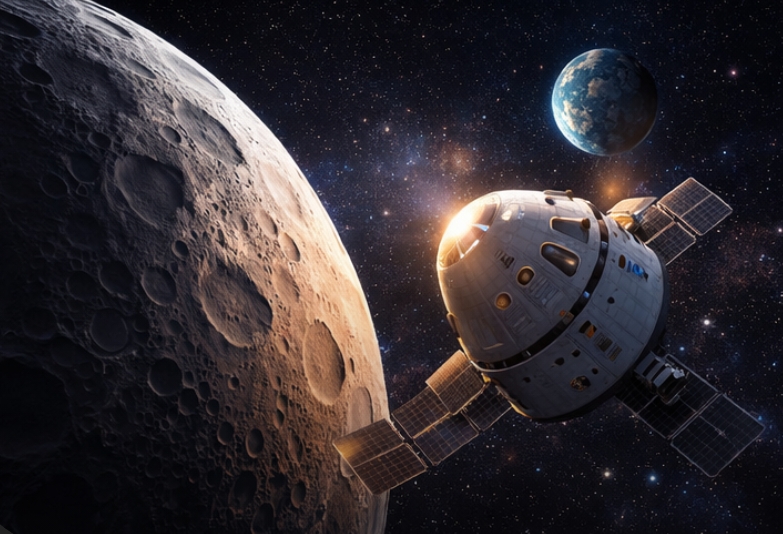
The Artemis II mission will use the powerful Orion spacecraft, which is designed to carry astronauts deep into space.
The Orion spacecraft includes:
- Advanced life support systems
- High-tech navigation tools
- Emergency safety features
It will be launched using NASA’s Space Launch System (SLS), one of the most powerful rockets ever built.
Mission Journey: Around the Moon
During the mission, astronauts will travel thousands of kilometers beyond the Moon, entering deep space before looping back toward Earth.
This journey is often described as a “lunar flyby”, where the spacecraft uses the Moon’s gravity to change direction and return home.
This path allows NASA to test critical systems required for future lunar landings.
Why Artemis II is Important
The Artemis II is more than just a spaceflight — it represents the next era of human exploration.
Here’s why this mission is so important:
1. Return of Human Deep Space Missions
This will be the first time in over 50 years that humans travel beyond low Earth orbit since the Apollo missions.
2. Preparation for Moon Landing
Artemis II will test all systems required for landing astronauts on the Moon in future missions like Artemis III.
3. Step Towards Mars
NASA’s long-term goal is to send humans to Mars. Artemis missions act as a stepping stone toward that objective.
Astronaut Experience
Astronauts onboard the Artemis II will experience:
- Deep space travel
- Long-duration spaceflight
- Views of Earth from extreme distances
- Close observation of the Moon
This mission will also provide valuable data on how humans perform in deep space environments.
Global Attention and Excitement
The Artemis II mission has attracted worldwide attention. Space agencies, scientists, and enthusiasts are closely following every development.
With advancements in technology and renewed interest in space exploration, missions like Artemis II are inspiring a new generation of scientists and engineers.
Future of Artemis Program
The Artemis program does not end with Artemis II. NASA has planned several missions ahead:
- Artemis III – Aims to land humans on the Moon
- Future missions – Establish a sustainable human presence on the Moon
These missions will eventually pave the way for human exploration of Mars.

Conclusion
The Artemis II marks a bold step forward in human space exploration.
With astronauts set to travel farther than ever before, this mission symbolizes innovation, ambition, and the human desire to explore the unknown.
As the launch date approaches, the world eagerly waits to witness history in the making — a journey that could shape the future of space travel for generations to come.
Table of Contents













Post Comment