By – Deepak Kumar
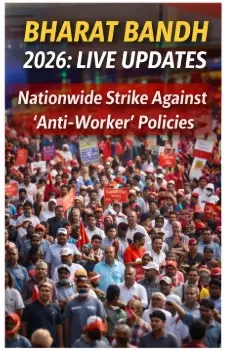
India witnessed a major wave of protests today as central trade unions called for a nationwide Bharat Bandh, live raising their voices against what they describe as the Centre’s “anti-worker” and “anti-farmer” policies. The Bharat Bandh has impacted several sectors across the country, including banking services, public transport, and educational institutions in some states.
The strike, supported by multiple trade unions and workers’ associations, has brought attention to long-standing demands related to labour rights, wage security, privatization policies, and inflation concerns.
Let’s break down what this Bharat Bandh means, who is supporting it, and how it may affect the common public.
Why Is Bharat Bandh LIVE Being Observed?
The Bharat Bandh has been organized by central trade unions who claim that recent government policies are not worker-friendly. Protesters argue that labour reforms, privatization of public sector units, rising prices of essential commodities, and unemployment are putting pressure on working-class families.
Union leaders have demanded:
- Better job security
- Withdrawal of certain labour codes
- Control over rising inflation
- Protection of public sector enterprises
- Minimum wage implementation across sectors
According to union representatives, the Bharat Bandh is meant to send a strong message to the government about protecting workers’ rights and ensuring fair economic policies.
How Is Bharat Bandh LIVE Affecting Daily Life?
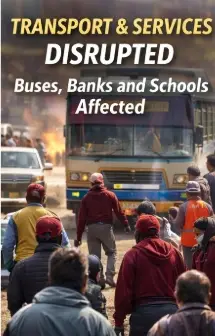
The impact of Bharat Bandh varies from state to state. In some regions, public transportation services like buses and taxis are running partially, while in others, they are functioning normally with security arrangements in place.
1. Banking Services
Bank unions in several areas have extended support to the Bharat Bandh. This has resulted in limited banking operations in certain cities. However, online banking services, ATMs, and digital transactions remain functional in most areas.
2. Public Transport
State-run buses and local transport services are affected in select states where worker participation is higher. Commuters have reported delays and cancellations in some routes.
3. Educational Institutions
Most schools and colleges remain open, but attendance may be lower in regions where protests are more intense.
4. Markets and Businesses
Local markets in some cities are partially closed as traders’ unions have extended support to the Bharat Bandh. However, large shopping malls and private businesses are mostly operating as usual.

Political Reactions toBharat Bandh LIVE
The Bharat Bandh has triggered mixed political reactions. Opposition parties in several states have shown support, claiming that workers’ concerns must be addressed seriously. On the other hand, government representatives have maintained that economic reforms are necessary for long-term growth and development.
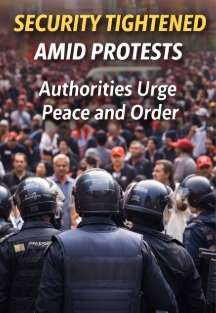
Officials have also assured that law and order is being maintained across the country. Security forces have been deployed in sensitive areas to prevent disruptions or violence.
What Are Workers Saying? Bharat Bandh ,live
Many workers participating in the Bharat Bandh say rising prices and stagnant wages are making survival difficult. Daily wage earners, factory workers, and public sector employees are among those actively participating.
Some workers believe that large-scale protests like Bharat Bandh are the only way to make their voices heard. Others feel that negotiations and discussions should be prioritized to avoid inconvenience to the general public.
Is Bharat Bandh Completely Shutting Down India?
No, India is not completely shut down. While the Bharat Bandh has caused disruptions in certain sectors, essential services such as:
- Hospitals
- Emergency services
- Police
- Electricity
- Water supply
are functioning normally in most parts of the country.
Railway and metro services are largely operating, although minor disruptions may occur in specific regions depending on protest intensity.
Bharat Bandh Impact on Stock Markets and Economy
Historically, Bharat Bandh events have had short-term economic impacts due to temporary closures and disruptions. Market experts say that while such strikes may cause brief slowdowns in business activity, long-term economic trends usually depend on broader policy decisions and global factors.
Investors are closely watching the situation, but there is no sign of major financial instability due to today’s strike.
Public Opinion on Bharat Bandh
Public reactions to Bharat Bandh are divided.
Some citizens support the protest, saying workers deserve better protection and fair wages. Others express frustration over transport disruptions and service interruptions that affect daily routines.
Social media platforms are filled with debates, with hashtags related to Bharat Bandh trending across platforms.
What Happens Next? for Bharat Bandh
The key question now is whether the Bharat Bandh will lead to discussions between trade unions and the government.
Experts believe that constructive dialogue is the best way forward. If both sides engage in meaningful negotiations, some of the demands raised during the Bharat Bandh may be reviewed or addressed in future policy updates.
For now, authorities are monitoring the situation closely to ensure peace and safety across all states.
Final Thoughts
The Bharat Bandh once again highlights the ongoing tension between economic reforms and worker welfare concerns. While strikes can disrupt daily life temporarily, they also serve as a reminder that inclusive growth requires balancing development with social security.
Whether one supports or opposes the Bharat Bandh, it is clear that worker rights, employment security, and rising living costs remain key issues in India’s economic landscape.
As the situation develops, citizens are advised to stay updated through official sources and plan their travel or banking work accordingly.